
InfoGripe Research Club

The InfoGripe Research Club brings together professionals and students interested in epidemiological surveillance, data science and public health who study the scenario of Severe Acute Respiratory Syndrome (SARS) in Brazil.
Sign up and receive information about activities promoted by the Research Club and related topics from TGHN LAC!
The aim of the Club is to promote a space for exchange, learning and the development of interdisciplinary solutions for the strategic improvement of the InfoGripe system at national level (situation room), which supports public health decisions through weekly bulletins with quantitative analyses of SARS transmission patterns.
The Club’s activities also include projects and collaborations structured throughout the process:
- Ongoing development of Pathfinder InfoGripe and integration of findings into the system.
- Progress on the subproject on nowcasting models and correction of reporting delays.
- Collaboration with the Barcelona Supercomputing Center and the University of Exeter on predictive models and climate analyses.
- Expansion of the use of laboratory data (GAL) for complementary studies.
InfoGripe

InfoGripe, developed by the Oswaldo Cruz Foundation (Fiocruz) in 2014 by researchers from the Scientific Computing Programme (PROCC), is a system dedicated to monitoring Severe Acute Respiratory Syndrome (SARS) for cases reported in the Notifiable Diseases Information System (SINAN) in Brazil and its Federative Units, with a focus on providing early warning signals for decision-makers, health professionals and society.
In March 2020, the system quickly identified changes in the age profile and a sudden increase in hospitalisations for SARS, generating alerts and wide media coverage. In this context, its bulletins were redesigned in more accessible language, becoming an important source of information for monitoring the pandemic. Since then, InfoGripe has published weekly bulletins from epidemiological week 8/2020 onwards, established direct integration with Ministry of Health reports, consolidated itself as a national reference in risk communication, and incorporated new indicators and analyses, such as breakdowns by age group, clinical progression and laboratory results.
Schedule
The Club meetings take place weekly in a situation-room format and last one hour. From October 2025 to October 2026, 48 meetings were held, with an average of 12 to 15 participants.
Meeting flow
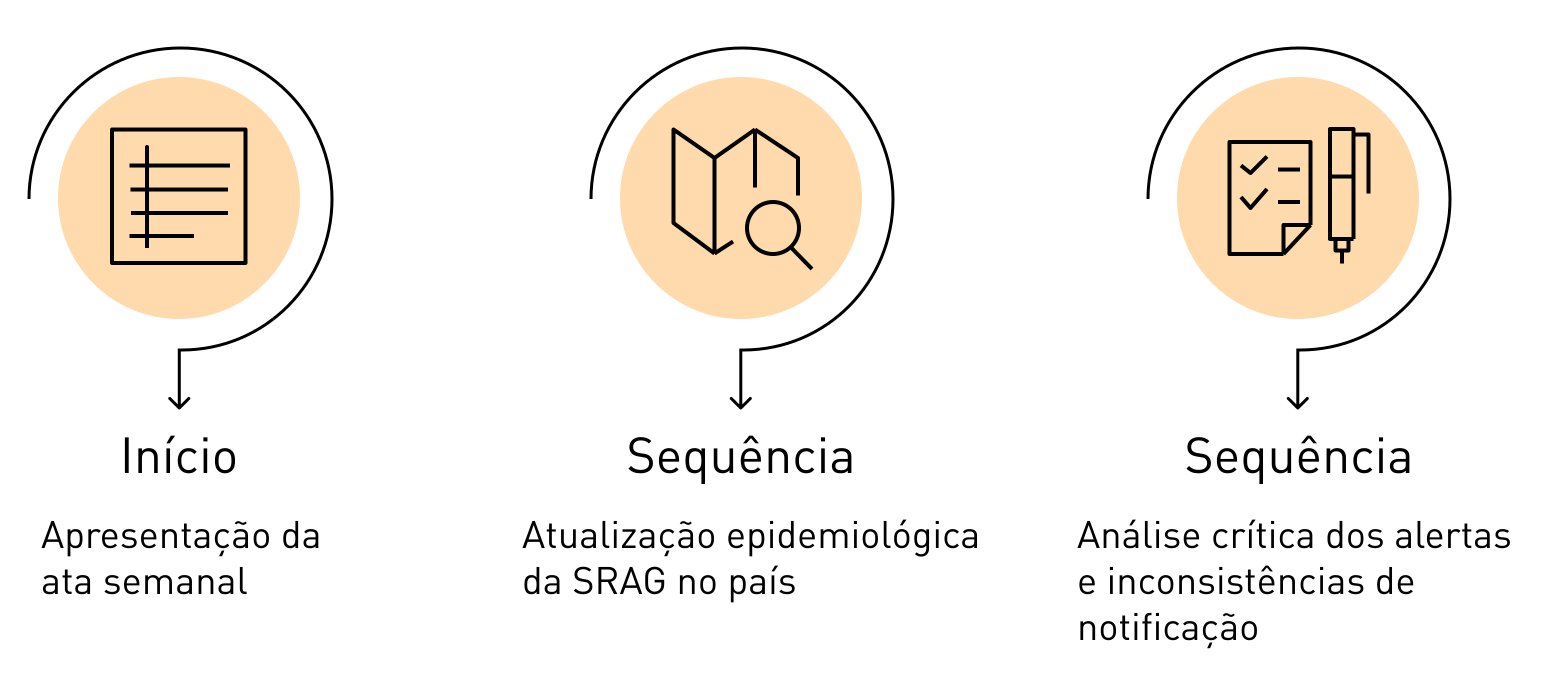
xxx
The meetings enabled the team to mobilise rapidly, ensuring robust analyses and high-quality risk communication for decision-makers and the wider public.
These meetings generated comments and published articles such as “The expansion of chikungunya in Brazil” in The Lancet, as well as the dissemination of weekly bulletins to decision-makers and society, reinforcing InfoGripe as a national reference in risk communication.
Lessons learned and challenges encountered
- Regional heterogeneity in SARS transmission patterns remains a challenge.
- Need to improve forecasts for population subgroups (age groups, clinical profiles).
- Consolidation of risk communication strategies that are scientifically grounded, yet in accessible language.
Activities and events
E-Vigilância 2025 is a symposium that aims to bring together and strengthen the community of researchers, students, professionals and entrepreneurs from different sectors interested in technologies for health surveillance.
Resources

InfoGripe glossary
Explore important terms and concepts in arbovirus surveillance and early warning systems, offering a simple way to support understanding and the use of health information.
Support the community
Thank you for visiting The Global Health Network, please take a moment to read this important message. As you know, our aim is to enable equity in access to research knowledge and this is successfully delivering support and training to 1000’s of research teams all over the world. But we need your support!. If you have benefited from this research skills and knowledge sharing facility, please help us sustain this remarkable and unique provision of information for those who could otherwise not access such support and training. We would be really grateful if you could make a donation or ask your employer or organisation to contribute to the costs of maintaining this platform and the generation of new contents for all users. Just a small contribution from everyone who can afford to pay would keep this available for those who cannot. Thank you, we really appreciate your part in this community effort to better equity in global health research.