Research Club on Biobanks

Biobank Research Club: Enhancing Scientific Competencies in Latin America and the Caribbean
The Research Club on Biobanks Latin America and the Caribbean (LAC) is a meeting space for researchers, health professionals and students from institutions in Peru and Brazil, including Universidad Peruana Cayetano Heredia (UPCH), Universidad Científica del Sur and Fundação Oswaldo Cruz (Fiocruz). Its purpose is to foster knowledge exchange on the storage of human biological material. The Club’s mission is to promote and strengthen the practice and understanding of biobanks in the LAC region, contributing to the development of participants’ scientific capacities in this field.
Modality: online, synchronous
Languages: Portuguese, Spanish and English.
Date and time of regular meetings: Monthly, every third Wednesday of the month, 1:30pm to 3:00pm (GMT-5 Lima time).
Fill in this biobanking activities interest form to receive information about the activities of the Biobanking Research Club: enriching scientific competencies in Latin America and the Caribbean.
Background
The club was launched on 19 March 2025 in an online event organised by Universidad Peruana Cayetano Heredia (UPCH), entitled Biobank Management and Organisation: the Fiocruz Experience, Brazil, which included the participation of researchers from the Fiocruz Biobanks Network (RFBB) and Fiocruz Pernambuco. In the following two months, the core group of founding researchers worked remotely on planning the club’s activities and agreements, particularly on organising another webinar, entitled Twinning The Global Health Network Latin America and the Caribbean (TGHN LAC) Brazil-Peru: Biosafety and responsible management of biological material. This second webinar took place on 18 June, in a hybrid format embedded within the TGHN LAC Steering Committee Meeting. On that occasion, the founding core group met in person in Lima, Peru, and expanded to include participants from Universidad Científica del Sur (UCSur).
Since then, the monthly online meetings have been taking place according to the pre-established schedule. Initially, the agendas prioritise the scientific and operational development of three research projects aimed at understanding the practice of biobank activities in the three countries and the institutional and ethical-legal framework for biobanks in LAC. So far, the club includes the participation of four RFBB managers, three researchers from the Fiocruz-TGHN LAC consortium, two researchers and nine students from Fiocruz Pernambuco, four researchers from UPCH, one researcher and three students from UCSur, in addition to a new researcher from Universidad del Valle (UniValle, Colombia).
Twinning
The collaboration within the Biobanking Research Club led to the formalisation of the twinning between Universidad Peruana Cayetano Heredia (UPCH), Universidad Científica del Sur (UCS), both in Peru, and Fundação Oswaldo Cruz (Fiocruz), in Brazil. Through the Twinning Programme Brazil - Peru: equity in research for biobanks, Fiocruz and UPCH intend, within the framework of The Global Health Network Latin America and the Caribbean (TGHN LAC), to support each other in addressing regional biobanking challenges. To this end, this collaboration is based on strengthening scientific capacity in biobanking at both institutions, in order to provide technical support to new biobanks that meet both local needs and international standards of quality and biosafety. Eventually, the resulting scientific output may contribute to advancing the impact of biobanks on the health of Latin American populations.
Schedule
April
15 April
Session to organise the in-person event in Lima
Chair: Fiocruz
October
15 October
Competencies, current lines and projects
Chair: UCSur
November
19 November
Competencies, current lines and projects
Chair: Fiocruz
December
17 December
Competencies, current lines and projects
Chair: UPCH
2026 - January
21 January
Competencies, current lines and projects
Chair: UCSur
February
18 February
Competencies, current lines and projects
Chair: Fiocruz
March
18 March
Competencies, current lines and projects
Chair: UPCH
April
15 April
Competencies, current lines and projects
Chair: UCSur
May
20 May
Competencies, current lines and projects
Chair: Fiocruz
June
17 June
Competencies, current lines and projects
Chair: UPCH
Resources
Research protocol: Situational Diagnosis of the Biobanking Culture in the Scientific Community of Fundação Oswaldo Cruz (pdf - Portuguese)
Fundação Oswaldo Cruz (Fiocruz) has been implementing measures for the establishment of decentralised institutional biobanks, with the strategic purpose of improving the quality of biological samples, the robustness of scientific data and the optimisation of public resources. In 2014, the Presidency of Fiocruz established the Fiocruz Biobanks Network (RFBB), linked to the Vice-Presidency of Research and Biological Collections (VPPCB). In line with the importance and value of biobanks for the validation and sustainability of biomedical sciences at Fiocruz, this project aims to outline a profile of the practice of storing human biological material (HBM) and the knowledge of the actors involved regarding biobank activities within the institution. It is expected that the results may support organisational strategies that contribute to the implementation and success of the RFBB biobanks and of the network itself.
Standard Operating Procedure (Spanish)
- Procedure for Hand Hygiene
- Procedure for Putting On and Removing Gloves
- Procedure for Putting On and Removing the N95 Respirator
- Procedure for Preparing 0.1% Bleach Solution
- Procedure for Blood Sample Collection
- Procedure for the Handling of Biohazardous Sharps Waste
- Procedure for the Conditioning, Segregation and Primary Storage of Biohazardous Waste
Club events
Twinning The Global Health Network LAC Brazil–Peru Webinar
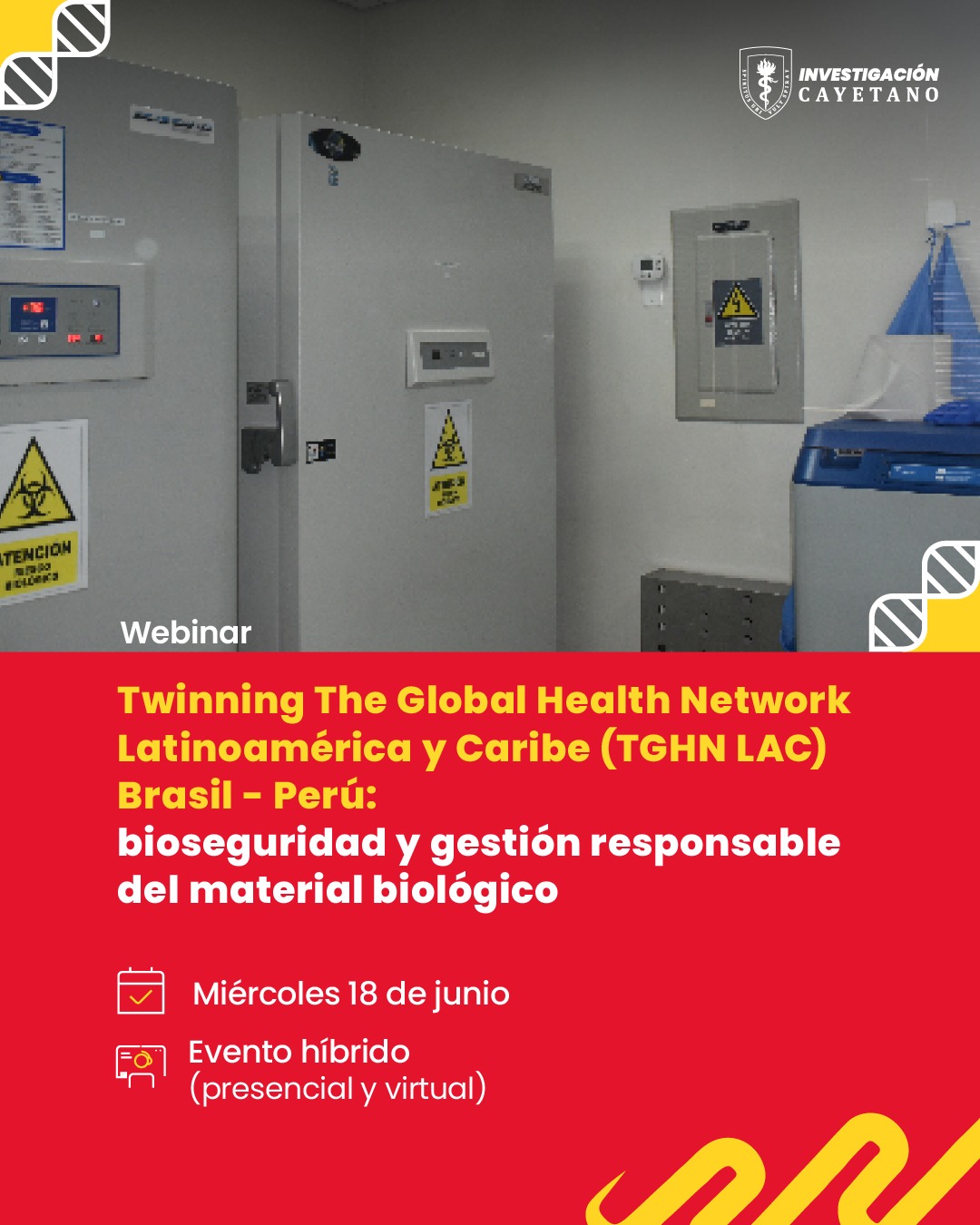
Universidad Peruana Cayetano promoted the Twinning The Global Health Network Latin America and the Caribbean (TGHN LAC) Brazil – Peru Webinar, an essential space for the academic and scientific community interested in biosafety and responsible management of biological material.
The event aimed to promote good practices in biosafety, the implementation and responsible management of biobanks, the use of the REDCap platform, as well as to strengthen scientific cooperation between Peru and Brazil within the framework of the TGHN LAC twinning initiative, and it was held in Spanish with translation into English and Portuguese.
Webinar Biobank management and organisation: the Fiocruz experience
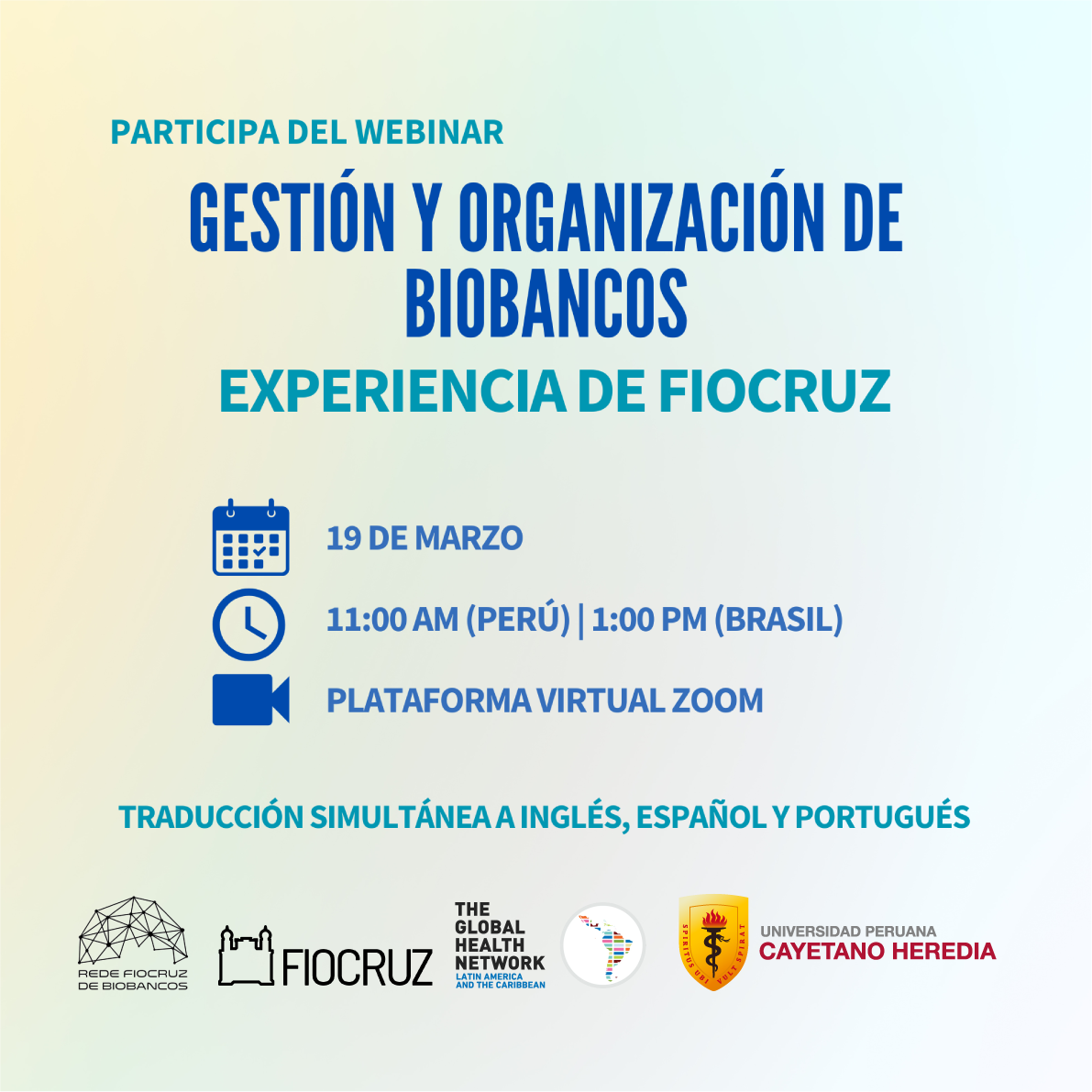
On 19 March 2025, The Global Health Network Latin America and the Caribbean (TGHN LAC), in collaboration with the Biosafety Office of the University Directorate for Regulatory Research Affairs (DUARI) at UPCH, Fiocruz and the Fiocruz Biobanks Network (RFBB), organised the webinar “Biobank Management and Organisation: the Fiocruz Experience”. This event aimed to create a space for knowledge exchange on biobank management, a crucial topic in scientific research.
Cinthia Hurtado (UPCH) introduced Daiane Sertorio, Cristiane Bresani, Sarah Benevenuto and Rodrigues Pereira (Fiocruz) to share their experiences in the webinar "Biobank management and organisation: the Fiocruz experience", with a discussion moderated by Henry Anchante (UPCH).
Date: 19 March 2025, 11am - 1pm (Peru) | 1pm - 3pm (Brasília).
Language: Simultaneous translation in English, Spanish and Portuguese.
Support the community
Thank you for visiting The Global Health Network, please take a moment to read this important message. As you know, our aim is to enable equity in access to research knowledge and this is successfully delivering support and training to 1000’s of research teams all over the world. But we need your support!. If you have benefited from this research skills and knowledge sharing facility, please help us sustain this remarkable and unique provision of information for those who could otherwise not access such support and training. We would be really grateful if you could make a donation or ask your employer or organisation to contribute to the costs of maintaining this platform and the generation of new contents for all users. Just a small contribution from everyone who can afford to pay would keep this available for those who cannot. Thank you, we really appreciate your part in this community effort to better equity in global health research.