arrow-downarrow-rightarrow-upback-arrowchecklistcloseAsset 5cpd-clockcpd-competenciescpd-cv-buildcpd-keyAsset 3cpd-other-pointscpd-previous-skillscpd-question-markreject2cpd-skillscpd-step-completecpd-submitcpd-updated-skillsddpm-closeddpm-starenvelopefacebookfilesglobegraphlinkedinmembermenunode-triangle-borderlessnode-trianglepluspm-clinicalpm-cmcpm-collapsepm-deliverypm-downloadpm-expandpm-global-accesspm-infopm-partnerspm-regulatorypm-researchpm-strategyrounded-arrow-rightArtboard 1speech-bubblesstarstar2triangletwitteryoutube
We use cookies to track visits to our website, and we don't store any of your personal details. Find out more
The Global Health Network The Global Health Network WHO Collaborating Centre
www.tghn.org

Not a member?

Find out what The Global Health Network can do for you. Register now.

More
Less
Donate Now

Member Sites A network of members around the world. Join now.

  • 1000 Challenge
  • ODIN Wastewater Surveillance Project
  • CEPI Technical Resources
  • UK Overseas Territories Public Health Network
  • MIRNA
  • Global Malaria Research
  • Global Snakebite Research
  • Global Outbreaks Research
  • Vivli Knowledge Hub
  • Sub-Saharan Congenital Anomalies Network
  • Global Health Data Science
  • Africa CDC
  • AI for Global Health Research
  • MRC Clinical Trials Unit at UCL
  • ARCH
  • IHR-SP
  • Virtual Biorepository
  • CONNECT
  • Rapid Support Team
  • The Global Health Network Africa
  • The Global Health Network Asia
  • The Global Health Network LAC
  • The Global Health Network MENA
  • Global Health Bioethics
  • Global Pandemic Planning
  • ACROSS
  • EPIDEMIC ETHICS
  • Global Vector Hub
  • PANDORA
  • Global Health Economics
  • LactaHub – Breastfeeding Knowledge
  • Global Birth Defects
  • Fiocruz
  • Antimicrobial Resistance (AMR)
  • EDCTP Knowledge Hub
  • PediCAP
  • CHAIN Network
  • ALERRT
  • Brain Infections Global
  • Research Capacity Network
  • Global Research Nurses
  • mesh
  • ZIKAlliance
  • ZikaPLAN
  • TDR Knowledge Hub
  • Global Health Coordinators
  • Global Health Laboratories
  • Global Health Methodology Research
  • Global Health Social Science
  • Global Health Trials
  • Zika Infection
  • Mother Child Health
  • Global Musculoskeletal
  • Global Pharmacovigilance
  • Global Pregnancy CoLab
  • INTERGROWTH-21ˢᵗ
  • ISARIC
  • WEPHREN
  • East African Consortium for Clinical Research
  • WANETAM
  • CANTAM
  • TESA
  • GBS
  • Women in Global Health Research
  • HeLTI
  • Global Health Research Management
  • Coronavirus

Research Tools Resources designed to help you.

  • Site Finder
  • Process Map
  • Global Health Training Centre
  • Resources Gateway
  • Global Health Research Process Map
The Global Health Network LAC
  • Inicio
    • Acerca de
    • Mapa regional
    • Contacto
    • Noticias
  • Actividades y eventos
    • Clubs de Investigación
    • Clínica de datos
    • Sesiones de Aprendizaje Asistido
    • Mentoría
    • Talleres
    • Webinarios
    • Twinning
    • Otras Actividades
  • Recursos
    • Crear un Club de Investigación
    • Preparar Sesiones de Aprendizaje Asistido
    • Crear Data Clinic
    • Búsqueda de información en bases … alertas PubMed
  • eLearning
  • Desarrollo profesional
  • Proyectos Pathfinder
    • Pathfinder Argentina
    • Pathfinders Brasil
    • Pathfinder Colombia
    • Pathfinder Honduras
    • Pathfinder Perú
    • Pathfinder Republica Dominicana
  • Mapa Interactivo
  • LAC Foro
  • Impacto
TGHN LAC Logo banner. - LAC

Perspectivas globales sobre las enfermedades infecciosas con riesgo de recrudecimiento y sus factores desencadenantes – Nature Scientific Report

TGHN LAC Logo banner. LAC
  • Acerca de
  • Mapa regional
  • Contacto
  • Noticias

Perspectivas globales sobre las enfermedades infecciosas con riesgo de recrudecimiento y sus factores desencadenantes – Nature Scientific Report

Las enfermedades infecciosas como la malaria, el dengue y la tuberculosis se consideran un reto tan importante para la salud mundial como los patógenos nuevos o emergentes, según un importante estudio internacional dirigido por The Global Health Network, comisionado por Wellcome.

Publicado en Nature Scientific Reports, el estudio recopiló las opiniones de 3752 profesionales de la salud e investigadores de 151 países y es uno de los estudios globales más amplios de este tipo, con un 86.9% de los participantes procedentes de países de ingresos bajos y medios. Los participantes señalaron que el cambio climático, la pobreza y la resistencia a los medicamentos se combinan para crear una crisis sanitaria cada vez mayor que podría convertirse en una «catástrofe progresiva» si no se aborda.

 Los datos recopilados en países de África, Asia y América Latina identificaron que los expertos de todo el mundo consideran que las enfermedades transmitidas por vectores, como la malaria y el dengue, son las amenazas que crecen más rápidamente, seguidas de la tuberculosis y el VIH/SIDA. La investigación confirmó que consideran que los tres factores principales son:

  • El cambio climático, especialmente el aumento de las temperaturas y los cambios en los patrones de precipitación se perfiló en todas las regiones como uno de los principales factores que contribuyen al aumento de las enfermedades, ya que amplía el área de distribución de los mosquitos y otros vectores, aumenta los lugares de reproducción y acelera la movilidad y el desplazamiento de las personas;
  • La desigualdad socioeconómica, que afecta a las condiciones de vida y al acceso a la atención sanitaria; y
  • La resistencia a los antimicrobianos, que socava los tratamientos para una amplia gama de infecciones en todo el mundo.

 La profesora Trudie Lang, directora de The Global Health Network del Departamento de Medicina Nuffield de Oxford y autora principal del estudio, afirmó: «Este estudio proporciona pruebas sin precedentes de las comunidades que actualmente sufren estas amenazas derivadas del cambio climático en el Sur Global, donde la carga de morbilidad es mayor. Por lo general, estas regiones están infrarrepresentadas y no tienen voz colectiva, pero estos datos y conocimientos se basan en la experiencia vivida y la diversidad global. Nuestra investigación demuestra claramente que la próxima emergencia sanitaria importante puede que no sea un nuevo brote repentino, sino el empeoramiento constante de las enfermedades silenciosas que acortan la vida cada día».

 Los autores del estudio sostienen que este riesgo no se presentará como un brote dramático, sino como un desastre humanitario de lento desarrollo en el que las enfermedades endémicas se propagarán a nuevas zonas geográficas, lo que afectará a los sistemas sanitarios y a las economías.  Además, los autores sostienen que abordar estos factores transversales que provocan enfermedades podría reforzar la preparación ante las amenazas actuales y futuras. Piden una inversión sostenida en diagnóstico, vigilancia y asociaciones de investigación equitativas que empoderen al liderazgo local y desarrollen una capacidad de investigación duradera.

 El estudio, Global perspectives on infectious diseases at risk of escalation and their drivers, está publicado en Nature Scientific Reports (DOI: 10.1038/s41598-025-22573-3).
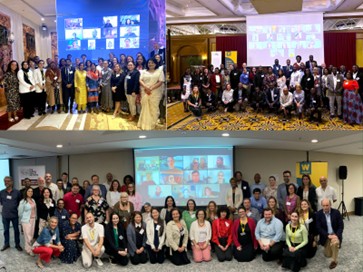
 Imágenes de los participantes en los talleres temáticos estructurados que se llevaron a cabo en África, Asia y Latinoamérica para explorar en profundidad los factores que impulsan la priorización de estas enfermedades, año 2023

Global perspectives on infectious diseases at risk of escalation and their drivers – Nature Scientific Reports

Infectious diseases such as malaria, dengue and tuberculosis are considered as significant a challenge to global health as new or emerging pathogens, according to a major international study led by The Global Health Network and commissioned by Wellcome.

Published in Nature Scientific Reports, the study gathered the views of 3,752 healthcare professionals and researchers from 151 countries. It is one of the most extensive global studies of its kind, with 86.9% of participants from low- and middle-income countries. Participants noted that climate change, poverty and drug resistance combine to create an escalating health crisis that could become a “progressive catastrophe” if not addressed.

Data collected across Africa, Asia and Latin America revealed that experts worldwide consider vector-borne diseases such as malaria and dengue to be the fastest-growing threats, followed by tuberculosis and HIV/AIDS. The study confirmed that these threats are driven primarily by:

  • Climate change, especially rising temperatures and altered rainfall patterns, which expand mosquito and other vector distribution, increase breeding sites, and accelerate human mobility and displacement;
  • Socioeconomic inequality, affecting living conditions and access to healthcare; and
  • Antimicrobial resistance, which undermines treatment success across a wide range of infections.

Professor Trudie Lang, Director of The Global Health Network at the Nuffield Department of Medicine, University of Oxford, and lead author of the study, stated: “This study provides unprecedented evidence from communities that are currently experiencing these climate-driven threats across the Global South, where the burden of disease is greatest. These regions are typically underrepresented and lack a collective voice, yet these data and insights reflect lived experience and global diversity. Our findings clearly show that the next major health emergency may not be a sudden new outbreak, but the steady worsening of silent diseases that shorten lives every day.”

The authors argue that this risk will not appear as a dramatic outbreak, but as a slow-moving humanitarian disaster in which endemic diseases spread into new geographic areas, placing strain on health systems and economies. They add that addressing these cross-cutting drivers of disease could strengthen preparedness for both current and future threats. The study calls for sustained investment in diagnostics, surveillance and equitable research partnerships that empower local leadership and build long-lasting research capacity.

The study, Global perspectives on infectious diseases at risk of escalation and their drivers, is published in Nature Scientific Reports (DOI: 10.1038/s41598-025-22573-3).

Images of participants in the structured thematic workshops held in Africa, Asia and Latin America to explore in depth the factors driving prioritization of these diseases, 2023.

Support the community

Thank you for visiting The Global Health Network, please take a moment to read this important message. As you know, our aim is to enable equity in access to research knowledge and this is successfully delivering support and training to 1000’s of research teams all over the world. But we need your support!. If you have benefited from this research skills and knowledge sharing facility, please help us sustain this remarkable and unique provision of information for those who could otherwise not access such support and training. We would be really grateful if you could make a donation or ask your employer or organisation to contribute to the costs of maintaining this platform and the generation of new contents for all users. Just a small contribution from everyone who can afford to pay would keep this available for those who cannot. Thank you, we really appreciate your part in this community effort to better equity in global health research.

Donate Now

©Copyright 2009 - 2025, The Global Health Network LAC

  • Links
    • Contact
    • Terms & Conditions
    • Accessibility
    • Privacy Policy
The Global Health Network is a World Health Organization collaborating centre for Research Information Sharing, E-learning, and Capacity Development